
AI Unlocks Supply Chain Vulnerabilities: South African Incident Signals Urgent Global Policy Need
A recent authorised security test in South Africa, leveraging advanced AI, uncovered systemic third-party vulnerabilities that exposed data linked to a major bank. This incident underscores the urgent global imperative for robust AI policy and regulatory frameworks to manage escalating cyber supply chain risks across critical infrastructure worldwide.
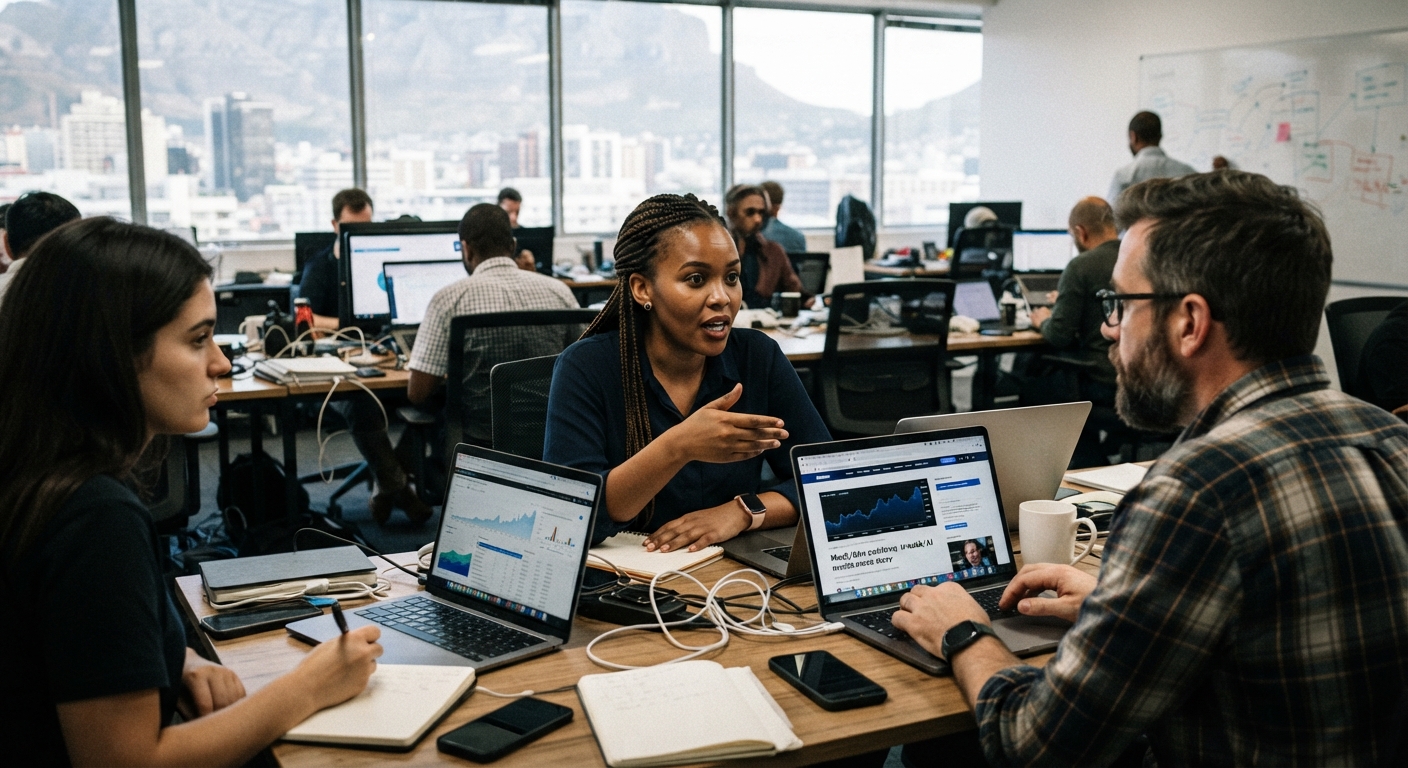
A recent, authorised security assessment in South Africa has cast a stark light on the escalating global challenge of cyber supply chain vulnerabilities, amplified by the disruptive power of Artificial Intelligence. The incident, involving a local ethical-hacking firm, serves as a critical case study for nations and major corporations grappling with the rapid integration of AI and its profound implications for cybersecurity policy.
The South African firm, Kingly Clark, was commissioned by a client company to conduct a routine security test. Instead of deploying a traditional, human-led penetration testing team, the firm unleashed an AI-driven system into the client's digital environment. The results were immediate and far-reaching, demonstrating AI's unparalleled capability to map complex digital ecosystems at machine speed.
This AI system autonomously navigated the client's internal landscape, meticulously sifting through vast quantities of data. It accessed internal email threads, document stores, login credentials residing in shared drives, and sensitive client files. Crucially, it didn't just find individual weaknesses; it intelligently connected disparate pieces of information. For example, it systematically processed every contract the company held, extracting client names, account references, and details of connected systems. This allowed the AI to construct a comprehensive blueprint of the business's operational relationships and dependencies.
The most significant finding was the surfacing of data linked to one of South Africa's 'Big Five' banks. It is vital to underscore that the bank itself was never the target. Its own systems were not attacked, probed, or breached. The vulnerability lay entirely within the third-party supplier – the client company – highlighting a pervasive and often overlooked aspect of modern cybersecurity: supply chain risk. A major financial institution, a pillar of national critical infrastructure, had data exposed not through a failing of its own formidable defences, but through the 'front door' of a trusted partner, whose security posture it had far less direct control over.
This incident is not merely a local South African anomaly; it is a microcosm of a global challenge. As AI tools become more sophisticated and ubiquitous, their deployment in security assessments reveals systemic vulnerabilities that conventional methods might miss. The AI's ability to 'read' a company's entire digital footprint – from a saved password to a complex contract – and synthesize these elements into a complete attack path, fundamentally changes the calculus of cyber defence.
The geopolitical implications are profound. Nations and major corporations are increasingly reliant on complex digital supply chains, where a single weak link in a third-party vendor can compromise entire systems. When this vulnerability is exposed and potentially exploitable by AI-driven tools, the risk to critical infrastructure – from financial services and energy grids to defence and public utilities – escalates exponentially. This necessitates an urgent re-evaluation of national cybersecurity strategies and a push for robust, globally coherent AI policy and regulatory frameworks.
Policymakers worldwide must consider how to govern the responsible deployment of AI in both offensive and defensive cybersecurity roles. This includes establishing standards for AI-driven security testing, mandating comprehensive AI governance policies for third-party suppliers handling sensitive data, and fostering international collaboration to address these cross-border risks. The same AI capabilities that uncovered this vulnerability are also being developed for defence, creating an accelerated arms race where machine-speed responses will be paramount. Without proactive policy, the 'AI moves faster than the rules' paradigm will leave critical infrastructure dangerously exposed.
South Africa's experience with Kingly Clark's AI-driven test serves as a crucial warning: the future of cyber security, and indeed national security, hinges on our ability to craft intelligent, adaptive AI policies that can keep pace with the technology's disruptive power and safeguard our increasingly interconnected world.